Continuously reassess network dynamics
The self-learning calculation continuously adjusts the network volume, pressure development and required flow capacity to the real operation.

AIRLEADER · CONTROL TECHNOLOGY
Airleader evaluates consumption and network dynamics in several time windows. In this way, not only the next compressor is switched, but also the economically suitable available combination.
Explore the functions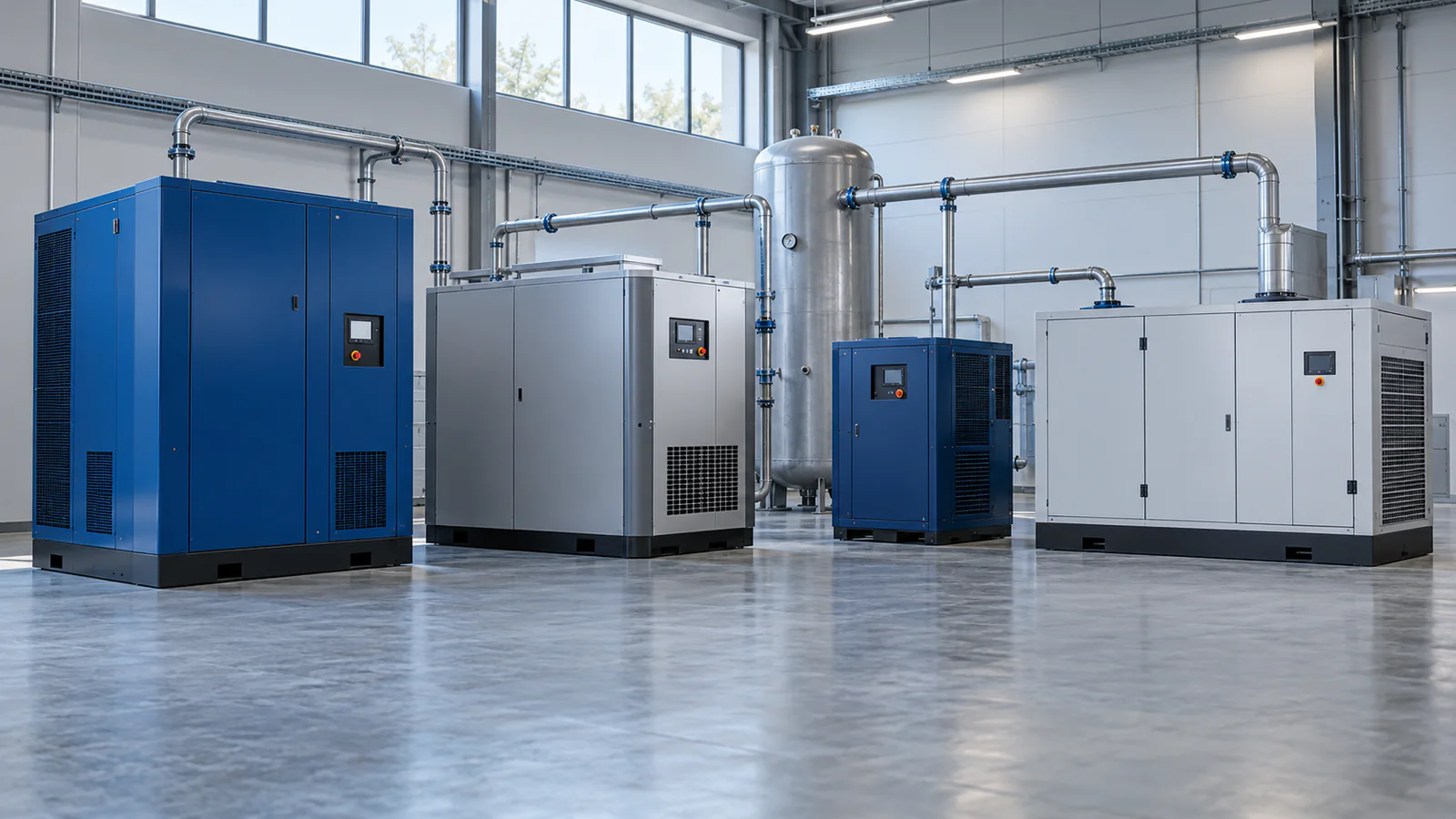

Control algorithm · included with every Airleader
The self-learning control algorithm is standard in every Airleader model. It continuously builds a station model from pressure, pressure gradient, flow capacities, availability and network behaviour. Calculations across multiple time windows reveal short-term demand spikes as clearly as the stable base load.


The self-learning calculation continuously adjusts the network volume, pressure development and required flow capacity to the real operation.
Airleader compares the available combinations, taking into account flow capacities, hysteresis, starts, runtimes, rankings and faults.
The selected combination runs predominantly under load. The smallest suitable compressor handles the remaining adjustment within the shared pressure band.
Feature · VSD Pro
A variable-speed screw compressor is not equally efficient across its entire speed range. Like a combustion engine, it has an optimum operating range. For a screw compressor, the curve is determined by the air end design, internal leakage, pressure ratio, and losses in the motor and frequency converter.
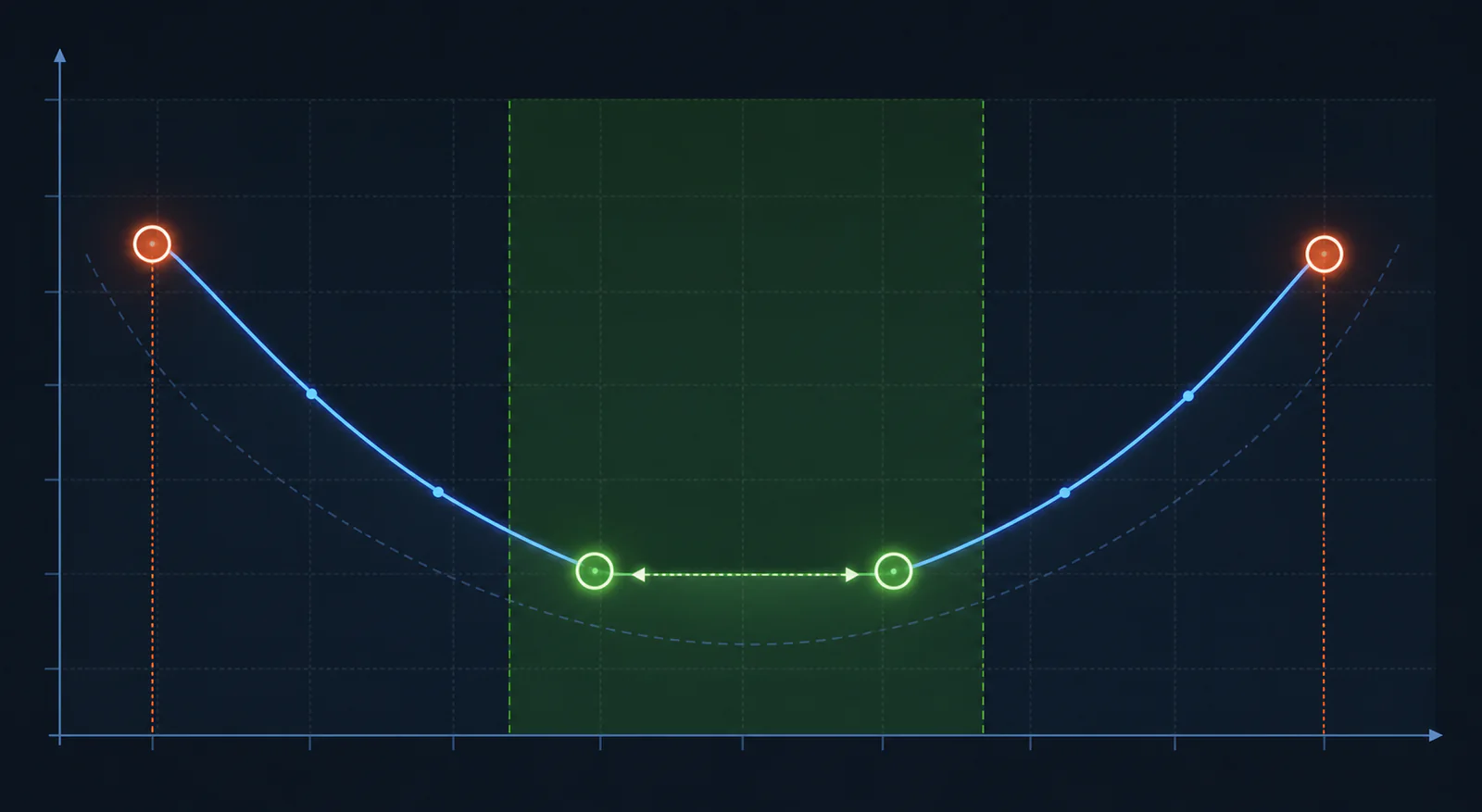
Schematic specific power curve.
Original technical diagram; scale and units are retained from the manufacturer’s source.
Several VSD compressors initially regulate independently to the same pressure. This allows one machine to turn very high and another very low – both outside the favorable range.
VSD Pro constantly monitors the operating points. The integrated actual pressure specification brakes a compressor that is too fast and accelerates it too slower without intervening in the internal controller or frequency converter.
The VSD compressors are operated at synchronised relative speeds and close to their most efficient operating ranges. In the 200 kW example, specific operating efficiency improves by around 6.5 percent.
System power (kW) × operating hours (h/year) × load share in the optimised range × efficiency gain (%) × electricity price (€/kWh). Example: 200 kW × 6,000 h × 50% × 6.5% × €0.18/kWh.
The prerequisite is the actual pressure integration on the compressor. The modular bus structure enables active speed intervention without rebuilding the internal machine control.
Feature · FIX-Speed whenever possible
When a fixed-speed compressor fits within the control range of one or more variable-speed compressors, FIX-Speed can make this operating point more economical. As VSD compressors continue to become more efficient, this feature can be configured to suit the installation.
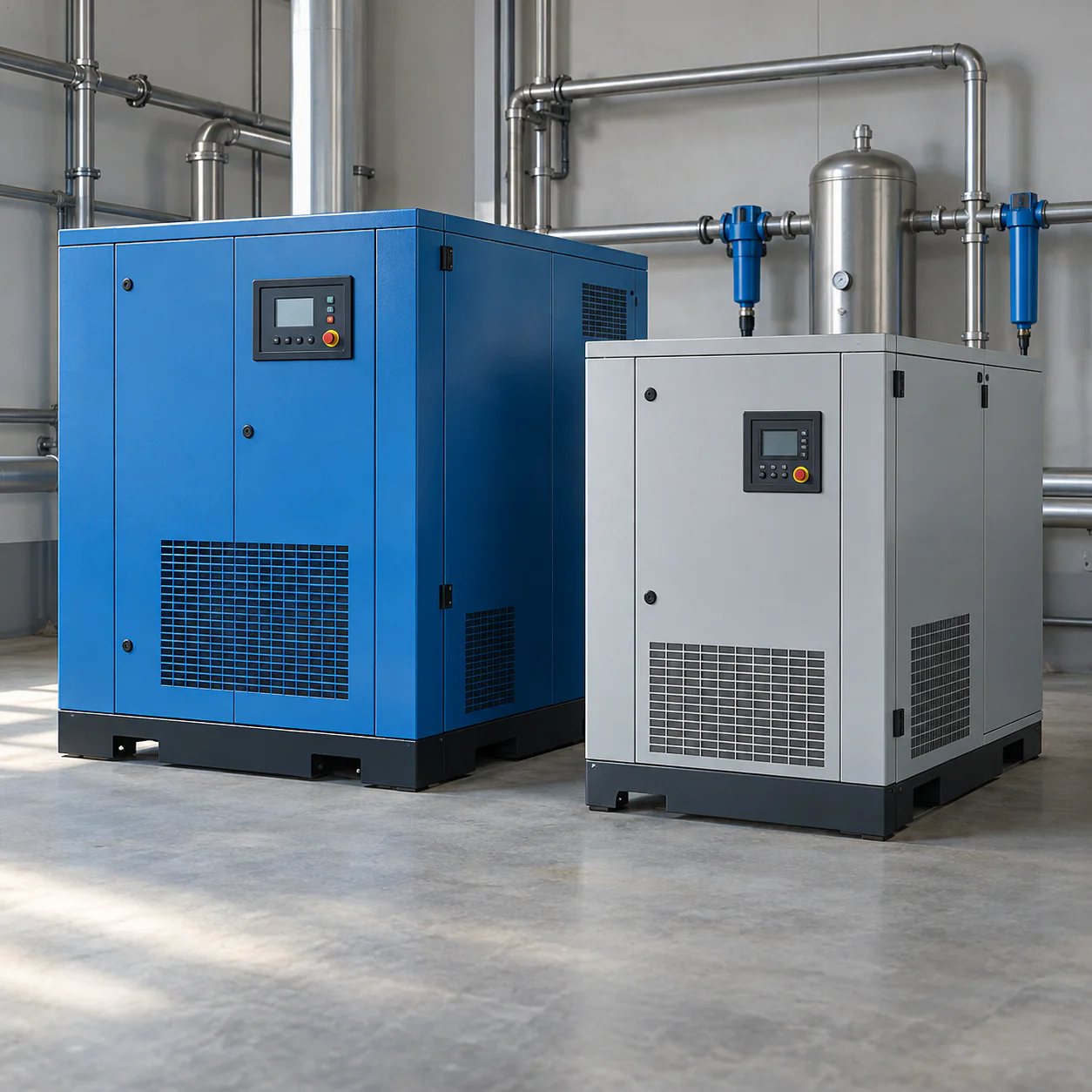
At the same flow rate, a VSD compressor typically requires around six percent more power than a suitable fixed-speed machine. This is due to additional losses in the frequency converter, motor control and variable-speed drive train. The actual value depends on the machine and operating point.
The function evaluates a fixed-speed and variable-speed operating combination as an alternative to two VSD compressors regulating in parallel. Priorities can be adjusted to match the actual efficiency of the installed machines.
The fixed-speed compressor supplies its efficient full-load share. A VSD compressor covers only the remaining, genuinely fluctuating demand.
Feature · Multiple pressure sensors
In widely branched or hydraulically unfavorable networks, the pressure at the station may be sufficient, while a pressure sink already arises at a remote consumer. Several control pressure sensors make these differences visible to Airleader systems.

In addition to the reference pressure sensor, two further system pressure sensors can be selected. Airleader thus forms a common control pressure and reacts earlier to local pressure drops.
If a sensor exceeds an adjustable deviation from the reference pressure, it is taken from the averaging. This prevents wrong decisions by blocked or defective measuring points.
A more responsive network model can reduce unnecessarily high pressure reserves. Reducing pressure by 1.45 psi saves approximately one percent of energy.
Feature · Distributed compressors
Compressors don’t have to be in the same room to run as a station. Airleader can classically integrate remote machines via RS-485 or optionally via the Ethernet network.
Connected via the existing Ethernet / IP network
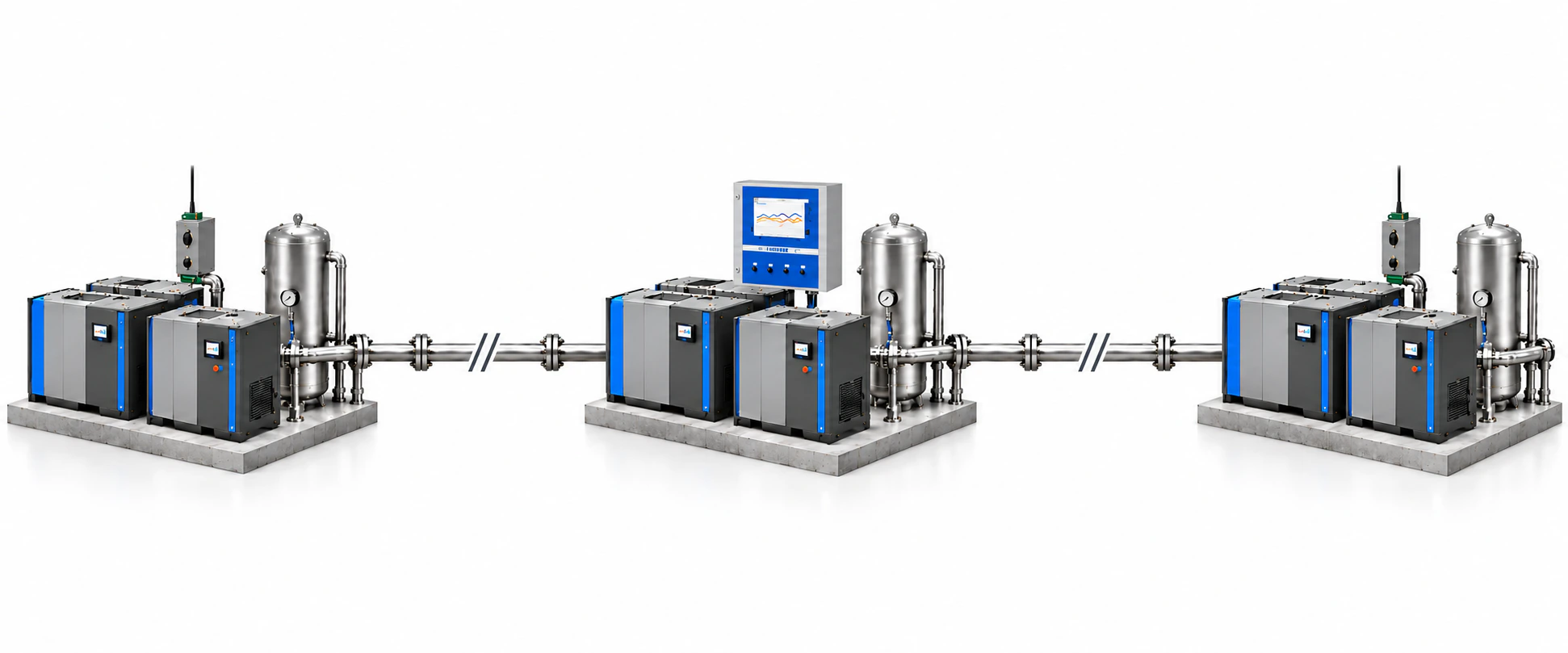 Ethernet / IP
Shared compressed-air line · large distances between stations
The bus technology supports cable routes up to approximately 1,200 metres and links connection modules from compressor to compressor.
For widely separated buildings, COM servers bridge the RS-485 bus over TCP/IP. Within a suitable, stable network infrastructure, distance is therefore not limited by the bus cable.
Pressure, availability and flow capacities of the decentralized compressors are included in the same combination determination.
Feature · Priorities and profiles
Not always the most energy-efficient machine should run first. Heat recovery, reserve concepts, layers or different pressure requirements require specific priorities.
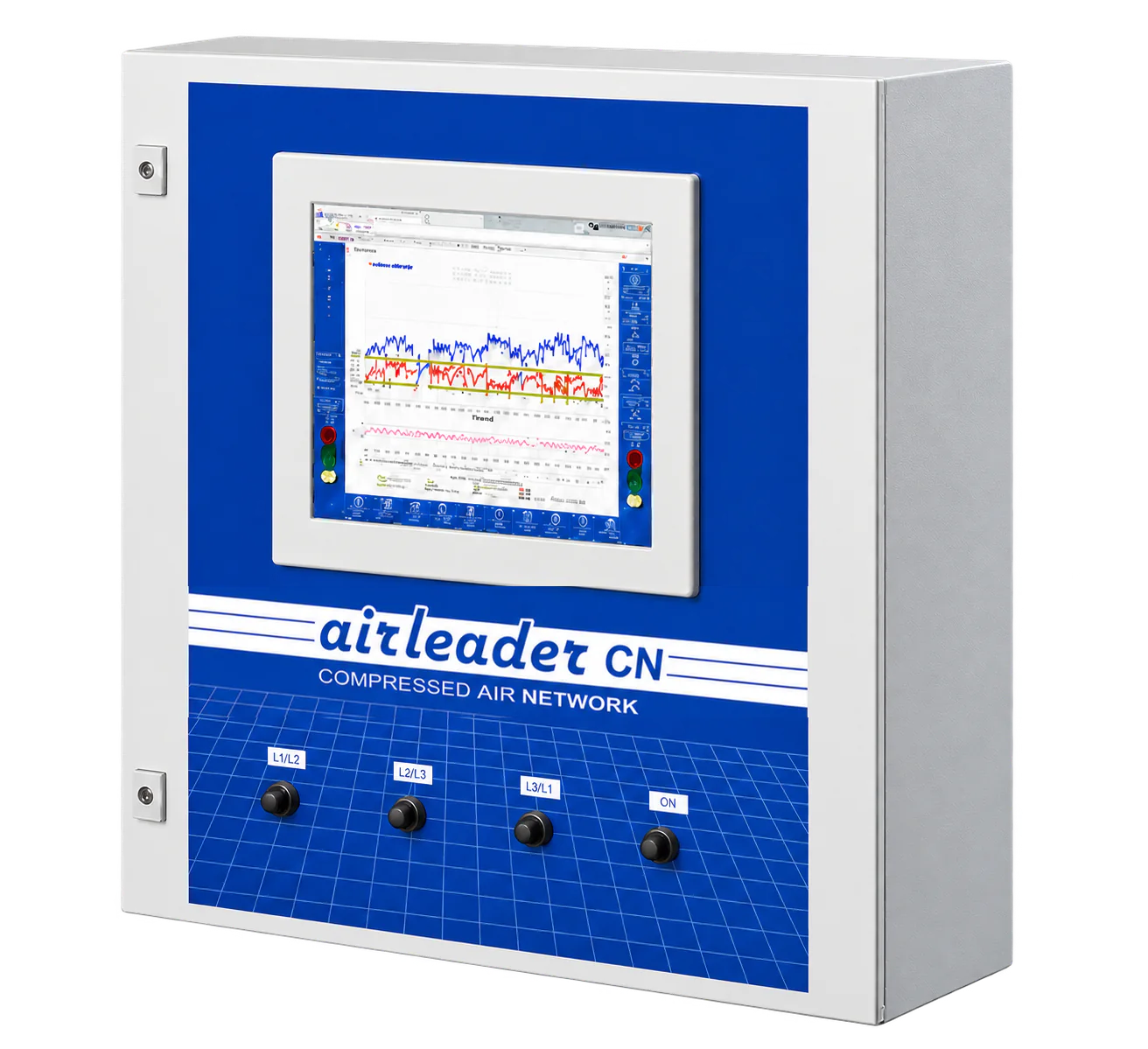
Compressors with usable heat recovery can be prioritized higher, pure reserve machines lower. Airleader continues to select machines of the same rank depending on consumption.
Up to four pressure profiles and four rankings can be activated via the weekly timer or external signals suitable for shift, production or special operation.
At the same output, Airleader replaces compressors within the pressure band as soon as the defined run time offset is reached.
Feature · Auxiliary equipment and sensors
The efficiency and operational safety of the station also depend on drying, filtration, condensate discharge, cooling and compressed air quality. Airleader combines their signals in the same system.
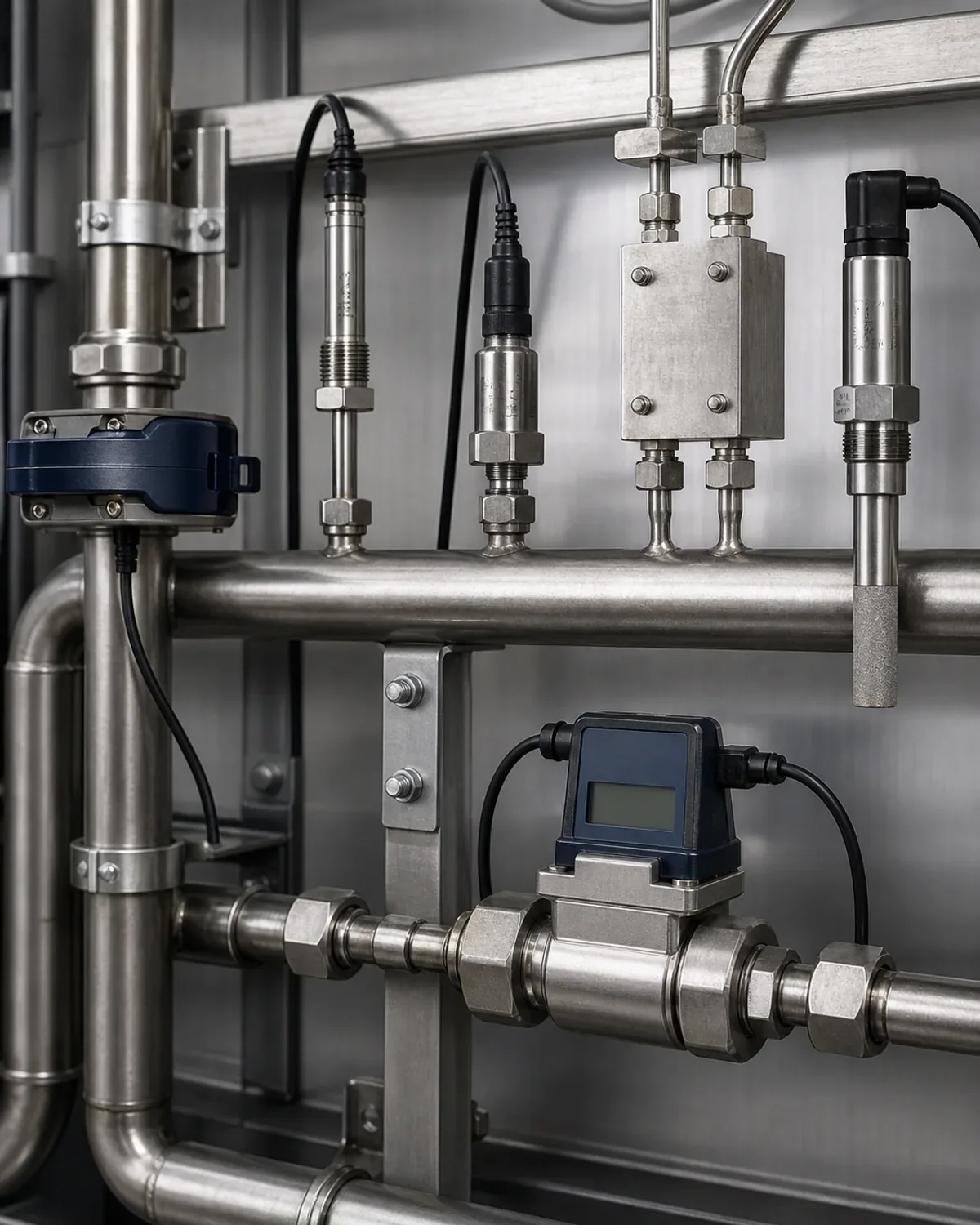
Pressure, dew point, temperature, volume flow, differential pressure, power and vibration can be recorded and evaluated together depending on the expansion.
Digital operating messages and analog limit values show conspicuous dryers, filters, condensate drains, pumps or vents before a supply problem arises.
Because compressor states and sensor signals are on the same time axis, pressure loss, quality deviation and energy input can be traced together.
Feature · Alarm and service management
Compressor and auxiliary equipment faults appear as on-screen warnings and in the monthly alarm and service report, revealing recurring issues early.
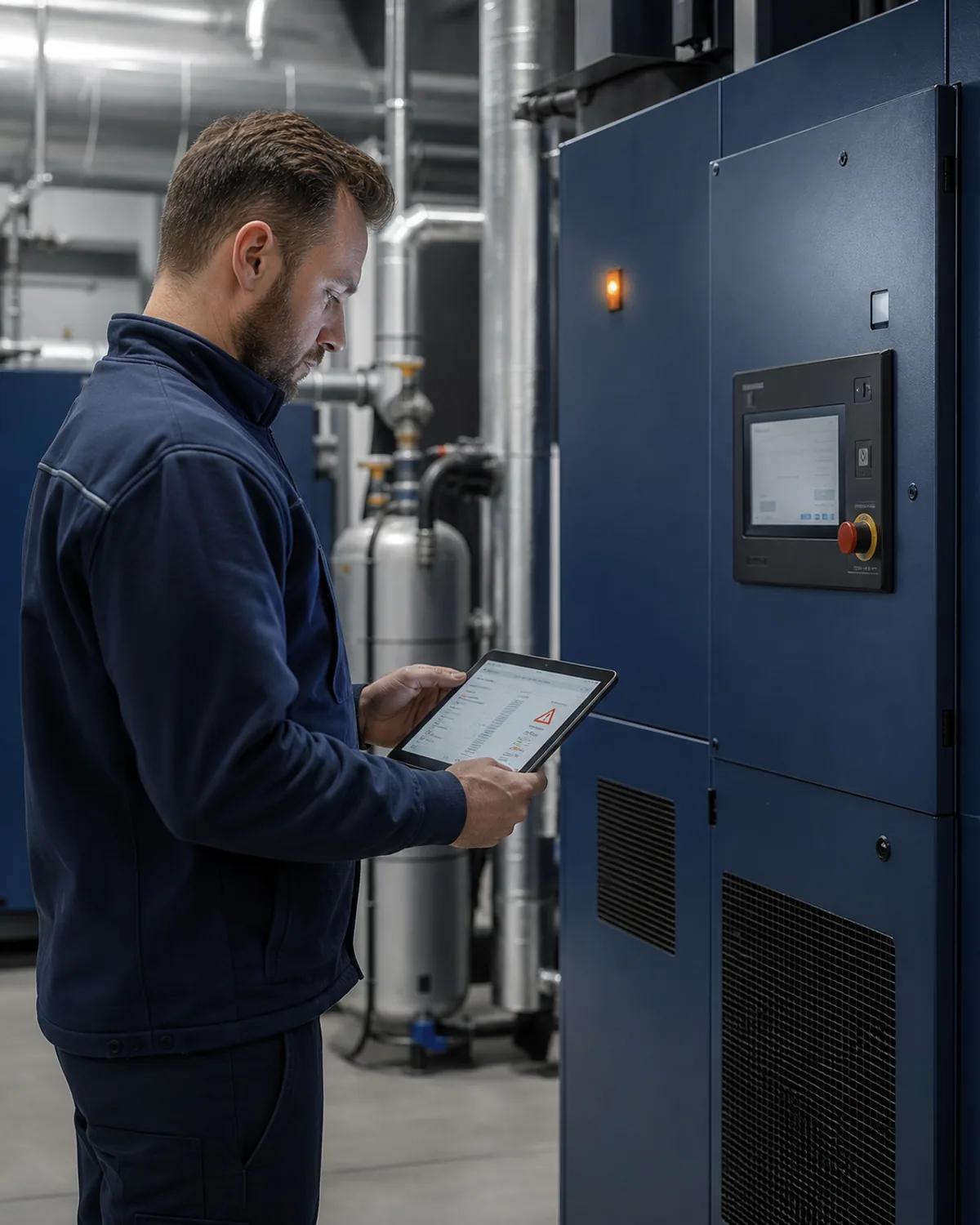
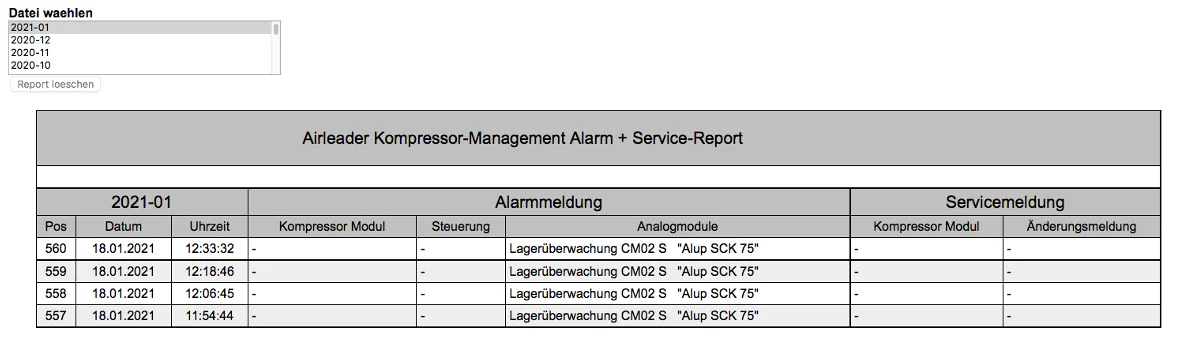
Monthly alarm and service report from Airleader web visualisation.
Original technical diagram; scale and units are retained from the manufacturer’s source.
Scroll sideways for detailsDepending on the controller, separate contacts for compressors and accessories provide two alarm channels to building management or telephone systems.
Optional alarm and service management sends notifications from web visualisation, including service alerts and exceeded sensor limits.
Features for existing Airleader systems
Missing a feature? Depending on your device, we can enable it through software or bring your Airleader up to date with a targeted hardware upgrade. Talk to us about the right option.