Measurement & compressed air audits3 min read
Measure a week. Decide with clarity.
Before investing in new equipment, get to know your station in everyday operation. Representative measurements reveal energy losses and changes worth assessing.


What happens during a compressed air audit?
01Define the station and the question
Record compressors, capacities, operating ranges, pipe networks, air treatment and production schedules. Include supply requirements, known faults and planned changes. Agree which decision the measurement should support and which equipment belongs within the measurement boundary.
02Prepare and carry out measurements
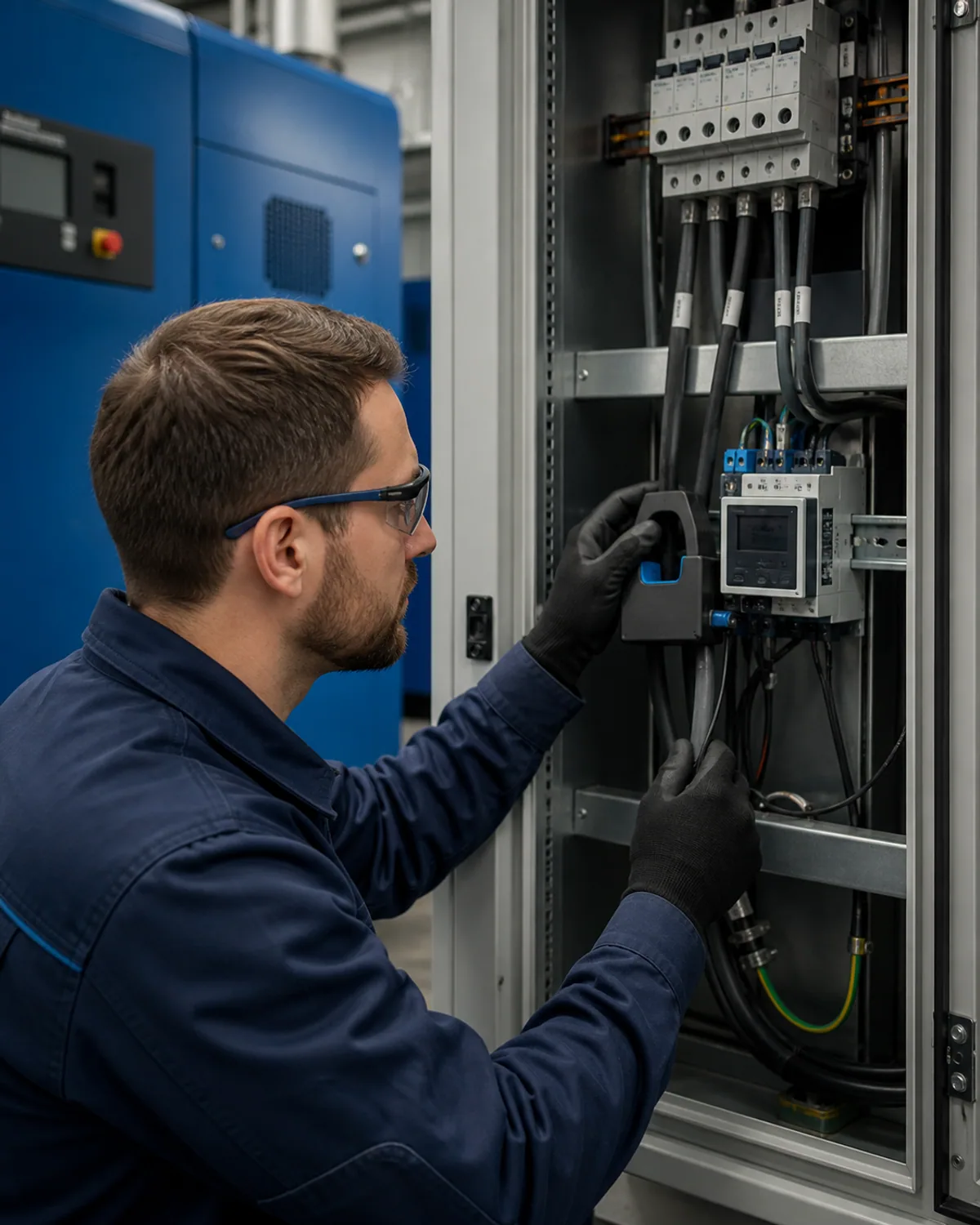
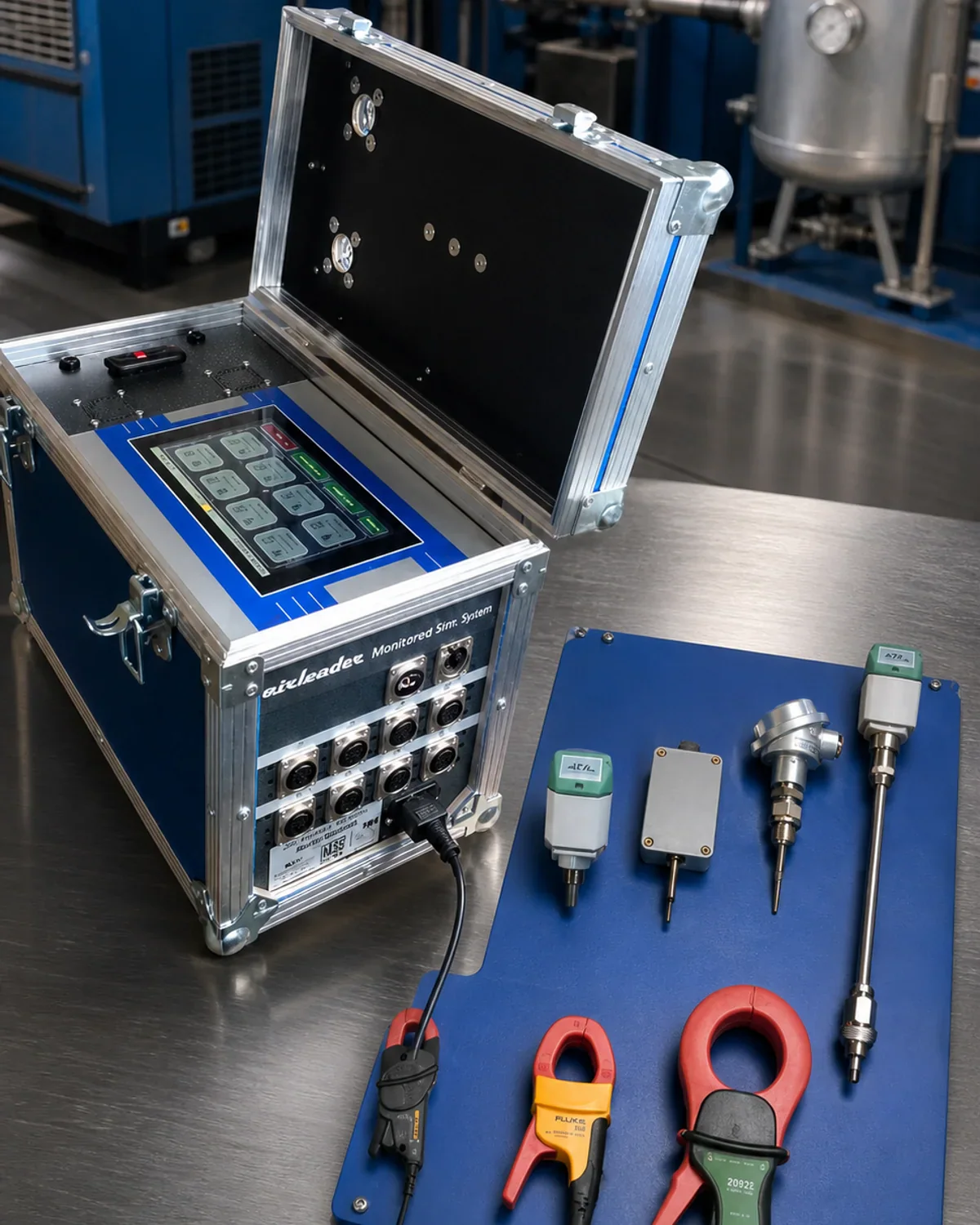
Record synchronised pressure, electrical power, machine states and, where possible, air flow. Cover typical shifts, demand changes and shutdown periods. Select suitable instruments; qualified personnel must carry out work on electrical installations and pressurised pipework.
03Check the data and operating states
Analyse loaded and unloaded periods, pressure, demand peaks and specific energy consumption. Identify missing signals, unusual production events and implausible readings. An exceptionally quiet week must not be extrapolated to a year without checking its relevance.
04Simulate alternatives for the same demand
Measured data supports comparison of compressor combinations and control strategies. Keep the underlying demand consistent. Include reserve capacity, pressure limits and machine constraints. Simulation provides a reasoned forecast to verify after implementation.
05Agree measures and verification
Document measurement boundaries, periods, assumptions, measures and economic calculations. Agree when and under what conditions performance will be measured again. This creates a verifiable before-and-after comparison that accounts for changes in production.
From understanding to action
What is happening in your station?
Let us look at demand, machine operation and the next useful measurement together.