Costs & performance indicators3 min read
What does your compressed air really cost?
You know the electricity bill. But what does the air your production needs every day cost? Three inputs turn a hunch into a number you can explain.


What does compressed air cost per cubic metre?
01Calculate specific energy consumption
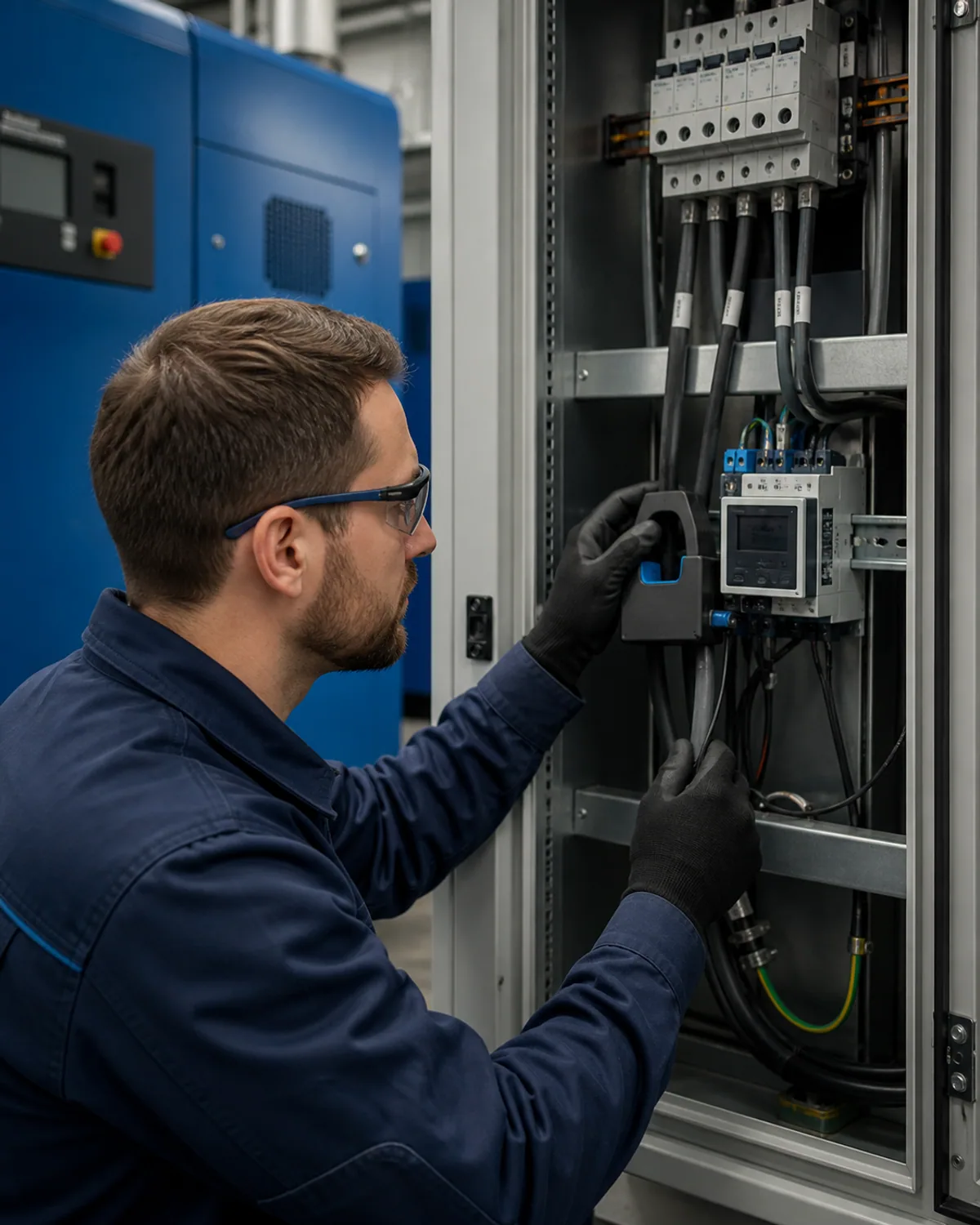
Divide station electricity consumption in kWh by the air volume in m³ produced during the same period. The result is specific energy consumption in kWh/m³. Define the measurement boundary and reference conditions for air volume consistently. Energy and volume from different periods do not produce a reliable indicator.
02A transparent example
An illustrative station consumes 120,000 kWh to produce 1,000,000 m³ of air: 0.12 kWh/m³. At an assumed €0.20/kWh, the electricity component is €0.024/m³, or 2.4 cents/m³. This is a calculation example, not a price promise or industry benchmark.
03What is missing from the energy calculation?
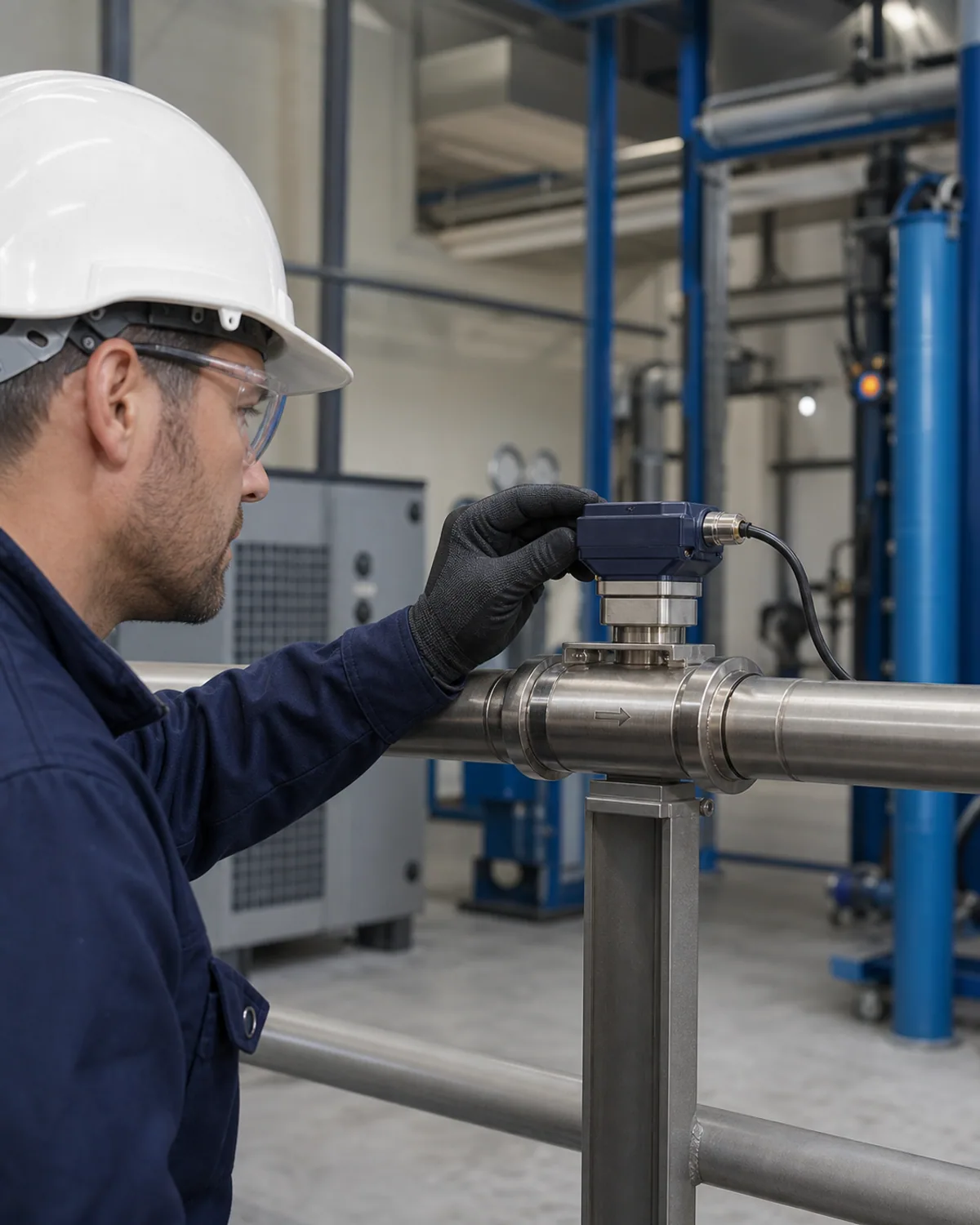
Maintenance, air treatment, investment and other operating costs belong in a total-cost calculation. State whether dryers and auxiliary equipment are already included in the electrical measurement. Credit heat recovery only for demonstrably useful heat, and avoid counting the same saving twice.
04Why pressure and leaks matter
Changes in pressure can affect energy demand and air consumption. Leaks increase generated volume without benefiting production. Assess air demand at the consumers and network pressure losses as well. A good generation indicator does not replace an assessment of the complete network.
05Compare operating periods consistently
Use comparable production and load conditions where possible. Record pressure, shift patterns, measurement points and included equipment. Account for production changes when interpreting results, then assess the contributions of control, pressure reduction and other measures.
From understanding to action
What is happening in your station?
Let us look at demand, machine operation and the next useful measurement together.